In short
- SEO results usually show up after 3 to 12 months. A new site in a tough niche can take even longer.
- In Google Search Console, impressions without clicks (say, in month three or four) are usually a good sign, not a failure.
- Stopping SEO after 3-4 months is risky. That is about when the first visible results start to appear.
- To see real progress, read Search Console data over full 28-day periods, not day by day.
6 months with no effect? Why SEO takes patience and consistency
Six months and nothing to show for it? That is discouraging, and it happens a lot the first time a business bets on SEO. You published the content, you fixed up the site, and the traffic just sat there.
SEO is slow. In the first months, search engines are still indexing your pages, collecting impression data and forming an opinion about how much authority the site has. Only once Google starts recognizing and rating you do the first results show up. How fast that happens depends on a lot of things, from the niche and the competition to the quality of the content and the technical state of the site. Those are the factors Ninorai works on every day, for exactly this reason.
How many months do you really have to wait for SEO results?
Visible SEO results usually take between three and twelve months. Where you land in that range depends on the site, the niche and the competition.
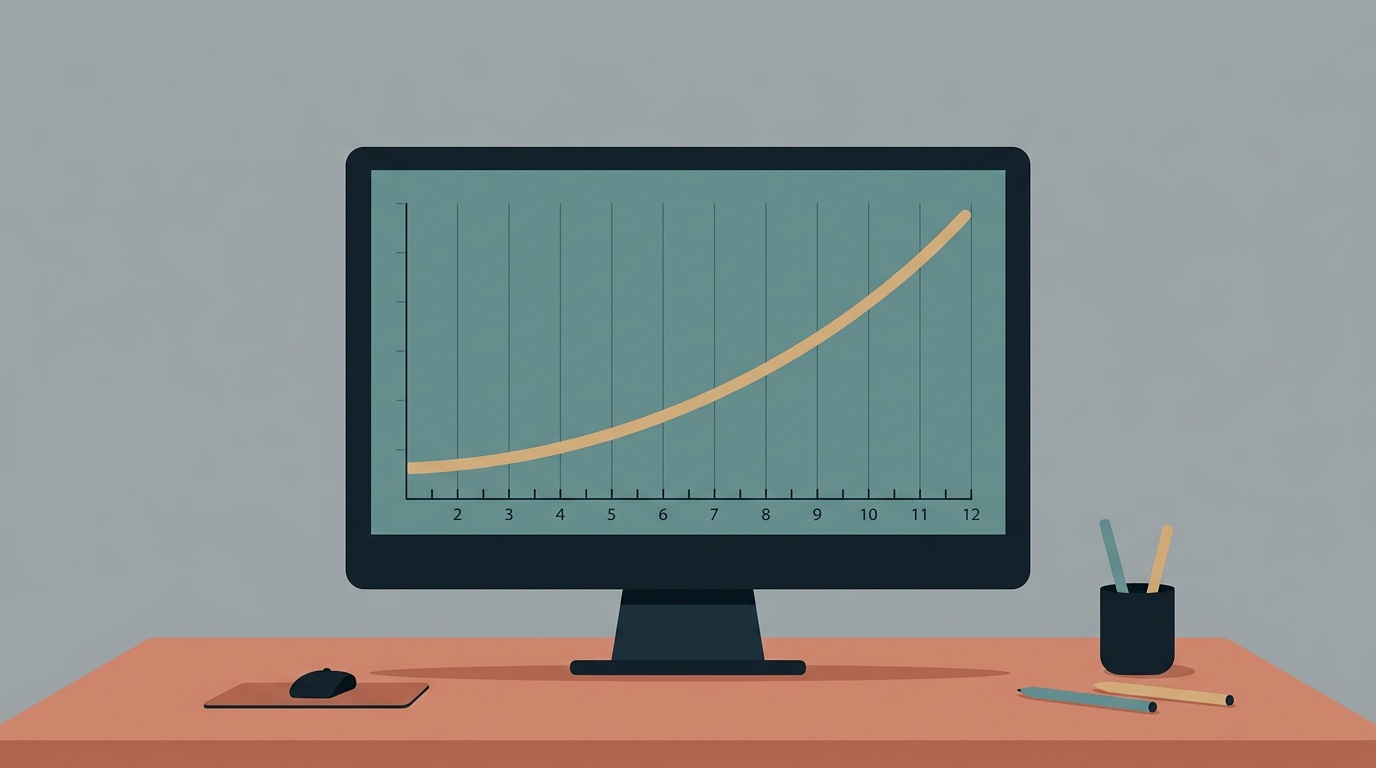
According to Search Engine Land: „SEO typically takes three to six months to deliver measurable results, and in highly competitive industries it can take six to twelve months to achieve a significant impact on rankings and revenue."
Four factors explain the spread: the age and authority of the domain, how competitive the niche is, how often new content goes out and the technical shape of the site. A new site in a crowded field may need the full twelve months. An older, established site that publishes regularly on a narrower topic can start climbing within three to four months.
Technical results (Google indexing you, impressions in Search Console) come fairly quickly, sometimes within weeks. Real business results (more visits, inquiries and revenue) come a good deal later.
Pages ranking in Google’s top 10 were, on average, published more than two years ago. That does not mean new content is doomed. It means the sites that keep publishing are the ones that get there.
What changes every month: from indexing to real revenue
Roughly, month by month:
| Period | What happens | Metric to check |
|---|---|---|
| Month 1-2 | Google starts indexing the pages. You sort out the technical setup and see very few impressions, or none at all. | Coverage report in Search Console, indexed URLs |
| Month 3-4 | The site shows up in the results, but low down. Impressions come in, clicks do not. | Impressions in the Performance report |
| Month 5-6 | The average position starts to climb. The first clicks arrive. | Average position, clicks |
| Month 7-12 | The site ranks for more keywords. Organic traffic grows and the first inquiries come in. | Organic traffic, number of keywords |
| After 12 months | Traffic is stable and you can measure what the organic channel actually returns. | Conversions, revenue from the organic channel |
Important: impressions without clicks in months 3-4 are a good sign. Google has found your content and rated it. The next job is to push the position up.
The focus shifts as you go. Early on, the work is mostly the technical health of the site. From month 5-6 the effort belongs in titles and meta descriptions, so the positions you already hold start earning more clicks. People who try to skip a stage rarely get away with it.
How to track your SEO progress in Google Search Console
Google Search Console shows how your site is doing in search. Six things to look at:
- Open Performance → Search results. That is where the reports on impressions, clicks, average position and CTR by keyword live.
- If impressions grow while clicks stay at zero, you are probably ranking somewhere between 20th and 50th. Good sign. The content is getting noticed, even if nobody is clicking yet.
- Watch the average position for each keyword. Going from 35th to 18th means the work is paying off. Traffic usually arrives with top 10 positions.
- Look at CTR only for keywords in positions 1 to 10. Below that the numbers are too thin to trust.
- Check the Coverage section and make sure the pages are indexed properly. A problem here can stall everything, no matter how good the content is.
- Review the data once a month, not every day. Daily swings in position are normal and tell you nothing about long-term progress.
Google Search Console data runs a few days behind. For a clear picture, compare full 28-day periods against each other.
New or old site: how your starting point affects results
| Criterion | New domain (under 1 year) | Established domain (1-3 years) | Mature domain (3+ years of active SEO) |
|---|---|---|---|
| First visible results | 3 to 6 months | 2 to 4 months | 1 to 3 months |
| First real organic traffic | 9 to 12+ months | 5 to 8 months | 3 to 6 months |
| Effect of regular publishing | Decisive, without it nothing moves | Speeds things up | Holds the positions |
| Sensitivity to competition | High | Medium | Lower |
| Content needs | Large and constant | Moderate | Smaller, but still there |
In competitive niches like finance, insurance or law, even a well-built site on a new domain can take much longer to rank. An established site with a solid technical base reacts faster to new content, especially when it goes out regularly. Mature sites that already carry authority get the most out of new content, but they can also lose positions after a long publishing pause.
If the business is just starting out, a steady publishing rhythm is not optional. It is how Google learns to trust a new site.
What happens if you stop SEO after 3-4 months?
Stopping SEO between the third and fourth month is a real risk, and an expensive one. That is the moment the site reaches the point where the effort starts to show. Quitting then means the investment pays out weakly right when it should be taking off.
Google does not punish inactivity on the spot, but a lack of new content reads as a drop in relevance. Positions slip bit by bit, and competitors who keep publishing take the empty spots.
The authority you have built does not disappear all at once, but without fresh content it slowly loses strength. Even one article a week is enough to keep the search engines interested and show the site is alive.
Automated publishing suits small and medium businesses that have no content team of their own. ninorai.com was built for exactly that: keeping the rhythm going without extra editorial hands. The free trial with two articles lets you see what the approach does before you commit.
Frequently asked questions
How many months do I really have to wait before SEO shows results?
The first technical signs, such as impressions and a better average position in Google, usually show up within three to six months. A measurable rise in organic traffic and more inquiries take six to twelve months on average. In tougher niches and on brand-new sites it can take longer.
How do I know SEO is working if I still don’t have more traffic?
Traffic is one of the last numbers to move. Before it does, you see more impressions in Google Search Console, a better average position for the keywords you target and more indexed pages. If those are climbing, the strategy is working.
What are the first signals that an SEO strategy is heading in the right direction?
Open the Coverage report in Search Console and check whether your pages are indexed yet. If impressions in the Performance report grow month after month and the average position for a few keywords keeps rising, you are on the right track. Clicks pick up once you rank inside the top ten.
What happens if I stop SEO after 3-4 months?
The authority you have built does not vanish overnight, but without new content your competitors gradually fill the gaps. Stopping early means walking away right before the visible results arrive, and the money spent so far buys you very little.
When does SEO start generating real inquiries and revenue for a business?
On new sites the first real inquiries from organic traffic usually show up after the ninth or twelfth month. On established sites that publish regularly, five or seven months is realistic. Consistency decides it. No new content, and the results slide further out.