
In short
- Paid advertising works fast, but the effect is short. Traffic stops the day the campaign stops.
- SEO content asks for patience. Results build up gradually, usually in three to six months, and after that the articles keep pulling in visitors for years.
- With a budget of 300 euros and a 2% conversion rate, Google Ads will bring you barely three potential customers a month.
- Even a small business with no marketing team of its own can build steady organic traffic with automated tools for SEO content, and get the longer-term benefit that way.
The ad budget runs out, and so does the traffic. How do you keep attracting customers?
Paid traffic is rent. As long as you pay, you are there. Stop paying and the visibility goes with it. Plenty of small businesses learn that the expensive way. Choosing between organic traffic and paid advertising is not really a question of what budget you have this month. It is a question of what you want the business to look like in a year or two. Ninorai.com builds the organic side of that for small companies, so customers keep arriving after the ad account goes quiet.
Paid advertising in brief: You rent traffic, you don’t own it
Google Ads runs on an auction. You pay for every click, whether the visitor sends an inquiry, buys something or just closes the page. In competitive European markets the cost per click usually sits between 1 and 5 euros, and in narrower sectors such as finance, law or insurance it often goes past 10 euros.
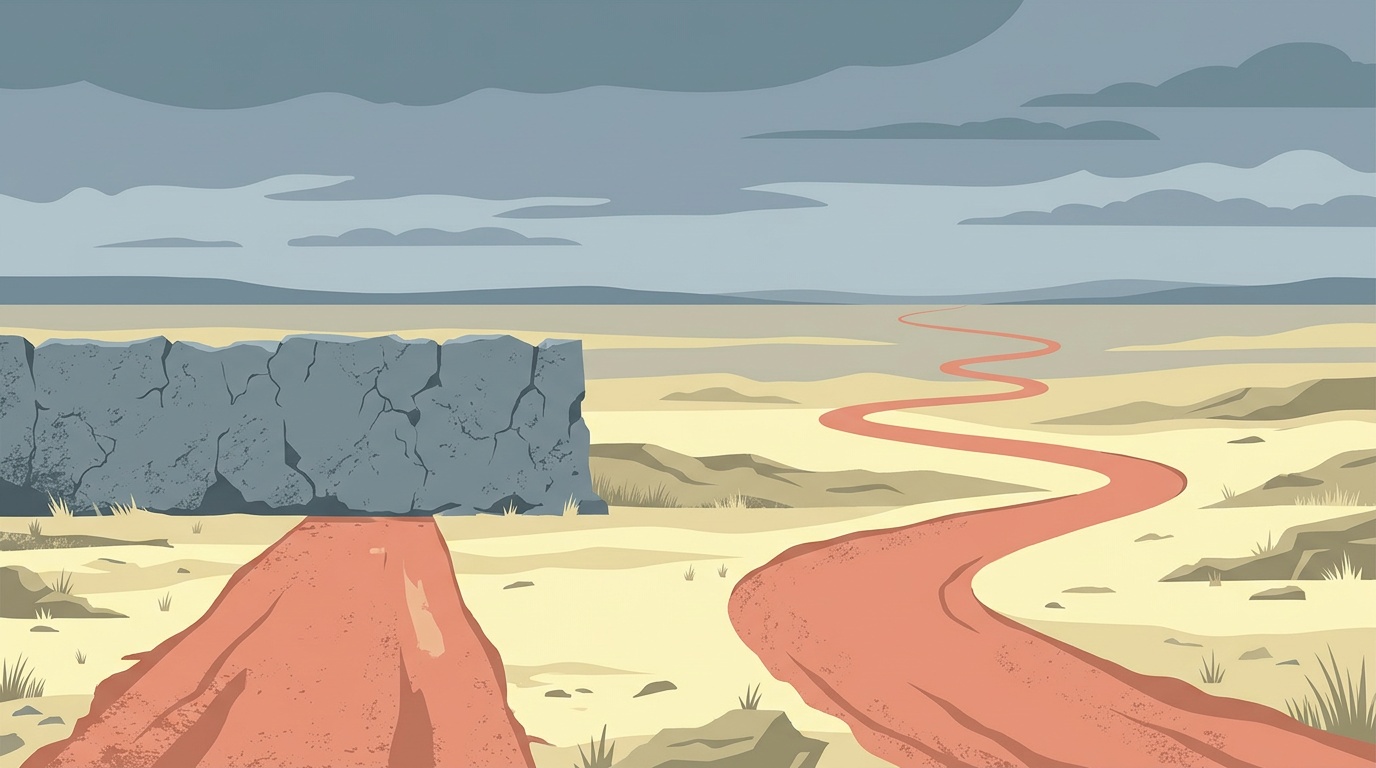
With 300 to 500 euros a month a small business can bring in a limited number of visitors, with no guarantee of actual sales. Do the arithmetic: at an average cost per click of 2 euros and a 2% conversion rate, 300 euros buys roughly 150 visits and barely three potential customers. That math can still work for some companies. It just has to be refunded every month, forever.
And paid advertising leaves nothing behind. Stop the campaign and the site is gone from the results the same day. No asset built, no lasting visibility, only a report in the ad account.
According to research cited by Forbes, 75% of users say paid ads help them find the information they need more easily. The effectiveness is real, for as long as you keep paying.
Paid advertising has its place: launching a new product, seasonal promotions, testing ad messaging. The trouble starts when it becomes a business’s only strategy.
How SEO content works for you: Compound effect and steady growth in visits
SEO content is a long-term investment. Paid advertising stops the moment you stop paying. Optimized articles keep bringing traffic to your site for months, sometimes years, after they go live. Search engines like Google reward sites with useful content that matches what people actually type into the search box.
The first results will not show up next week. It usually takes between 3 and 6 months to see a meaningful effect, and how long exactly depends on how crowded your niche is. This is the stage where a lot of companies run out of patience and quit, right before the content would have started paying them back.
Every new article does two things at once. It widens the set of keywords your site can be found for, and it lifts the overall authority of your domain in the eyes of search engines. Those two feed each other, and organic traffic grows steadily as a result.
A solid pillar-cluster architecture amplifies the effect of every single article. Google then judges not only what sits on one page, but how much the site as a whole knows about the topic.
So the two channels behave very differently over time. Advertising is fast and disappears when payments stop. SEO content starts slower, but once it is there, the presence holds. Successful companies do not treat it as the „cheap" option. They treat it as the one whose benefits pile up.
SEO vs. Google Ads: A comparison across 6 key metrics
| Criterion | Paid advertising (Google Ads) | SEO content (manual) | Automated SEO content |
|---|---|---|---|
| Initial cost (EUR/month) | 300-1000+ EUR for clicks alone | 500-2000+ EUR for copywriters and SEO specialists | Fixed monthly subscription |
| Ongoing cost after 12 months | Constant or rising | Predictable, depends on the team | Fixed and predictable |
| Durability after you stop | None, visibility disappears | High, the articles stay | High, the articles stay |
| User trust | Lower, the ad is labeled as such | High, organic results are seen as more reliable | High |
| Visibility in AI search engines | None, AI Overview does not show ads | High with good optimization | High, optimized for SEO, GEO and AEO |
| Team requirements | PPC specialist or agency | Copywriter, SEO specialist, web developer | No specialized team required |
Paid advertising is a sound choice for campaigns with short, clearly defined goals. Manual SEO content builds something valuable, but it eats resources and money month after month, which is hard for a small business to keep up. Software for automated content generation covers the gap for companies with no marketing department, giving them consistency without an in-house team.
When paid advertising is worth the money, and when to save it
Google Ads has its place. Most of the disappointment with it comes from asking it to do a job it was never built for.
There are three situations where paid advertising makes sense:
- You are launching a new product or service with no organic visibility yet, so you need traffic fast.
- You have seasonal promotions with a fixed deadline and an expected return on investment.
- You want to test different ad messages before putting more money into long-term content.
Leaning on ads alone is a bad idea when the budget is tight, when you are after long-term visibility, or when your niche is crowded and the CPC (cost per click) is high. Costs climb, the return does not climb with them.
Which leaves the organic channel, and the work of adapting your content for it.
How a small business without a marketing team builds long-term organic traffic
Small businesses rarely get stuck on the theory. They get stuck on keeping it up. Everyone knows that regular publishing drives steady growth. In practice it takes a copywriter, an SEO specialist and a web developer pulling in the same direction.
Automated content creation takes that requirement off the table. The ninorai.com platform puts four specialized AI agents to work together, marketing, copywriting, SEO and web development, so every article is optimized at once for SEO, geographic and authorship optimization. What comes out is unique material aimed at your specific niche, with the system checking for duplicate content on its own.
Consistency matters more than any single perfect article. Businesses that publish regularly over 6 to 12 months build topical authority that paid ads cannot match.
Before you commit to anything, you can test ninorai.com for 14 days with 4 real articles and watch how they behave in your own niche.
Frequently asked questions
Is organic traffic really free?
Not quite. You do not pay per visit, but producing quality content costs you something. The difference is that this investment keeps working long after you make it, while paid advertising is an expense that never ends.
What happens to your visibility when you stop the ads?
Your visibility in the results disappears the moment the paid campaign stops. If you have put work into your content and SEO, the rankings stay where they are and keep sending visitors.
When does an SEO investment pay off compared to paid advertising?
SEO results usually become visible after about 3 to 6 months. Paid advertising brings visitors immediately, but the effect is temporary. Over a year or more, well optimized content is often cheaper per visit.
Which channel delivers a higher conversion rate?
Data cited in PMC shows that organic posts receive on average 25% more engagement than paid ones. Someone who reaches your site through a search engine went looking for it. Someone who sees an ad was in the middle of something else.
How do AI search engines affect organic traffic?
AI search engines such as Bing with Copilot, ChatGPT and Perplexity do not show paid ads. Articles optimized for SEO can surface in these channels. That opens up ways to attract visitors that paid advertising simply cannot reach.
Can a small business without a marketing team build sustainable organic traffic?
Yes, with an automated publishing tool. Producing content on your own with no in-house team is hard to sustain. Automation covers the consistency without hiring specialists.